
Assembly lines don’t forgive sloppy tools. One loose fastener, one wrong torque setting, and a whole batch can fail inspection. That’s the reality for teams working in aerospace, automotive, and heavy manufacturing across the UAE. In this blog, we walk through four names that keep showing up in serious workshops: Cleco assembly tools, Desoutter assembly tools, Norbar torque wrenches, and Apex bits & sockets. We’ll also touch on foam profiling for tools, because organized tools are safer tools.
Why Precision Tools Matter More Than People Think
A drill or a wrench looks simple on the surface. Turn it, tighten it, done. But precision tooling isn’t about brute force. It’s about repeatable accuracy, every single time, on every single unit coming off the line.
We’ve seen how one badly torqued bolt can cause vibration issues months later. Nobody wants that call from a client.
Here’s what separates precision tools from ordinary ones:
- Consistent torque output across thousands of cycles
- Built to reduce operator fatigue during long shifts
- Designed for specific industries like aviation, oil and gas, and automotive assembly
- Backed by calibration standards that hold up under audit
Reliability isn’t a bonus feature here. It’s the whole point.
Cleco Assembly Tools: Built for High-Speed, High-Volume Work
Cleco has been a familiar name on production floors for decades. These pneumatic tools are known for speed without sacrificing control, which matters when you’re fastening hundreds of components a shift.
What Makes Cleco Stand Out
Cleco tools are lightweight, which sounds like a small thing until you’ve held a heavier alternative for eight hours straight. Operators notice the difference by lunchtime.
A few practical strengths:
- Ergonomic design that lowers strain during repetitive tasks
- Adjustable torque settings for different fastener sizes
- Durable build that holds up in dusty, high-heat environments
- Wide range of models, from pistol grip to angle nutrunners
For assembly lines in automotive plants or general manufacturing, Cleco assembly tools often become the default choice simply because they get the job done without drama.
Desoutter Assembly Tools: Engineered for Accuracy
Where Cleco focuses on speed and volume, Desoutter leans into accuracy and traceability. This French-origin brand has built a reputation in industries where torque errors carry real consequences, think aerospace and automotive powertrain assembly.
The Technology Behind Desoutter
Many Desoutter tools come with electronic torque control, meaning the tool itself flags an error before it becomes a defect. That’s a meaningful shift from older pneumatic-only tools.
Key benefits worth noting:
- Real-time torque monitoring for quality assurance
- Data logging for traceability and audits
- Ergonomic grips that reduce operator fatigue over long shifts
- Compatibility with automated assembly systems
We’d say Desoutter assembly tools are less about raw power and more about proof. Proof that every bolt met spec, every time.
Norbar Torque Wrenches: The Standard for Precision Torque
If you ask any calibration engineer about torque wrenches, Norbar usually comes up early in the conversation. Founded decades ago, the bra
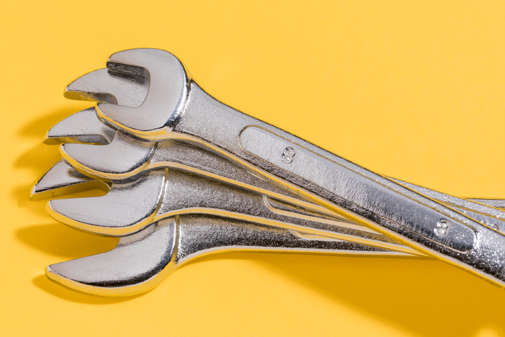
nd has built its name around one thing: getting torque exactly right, no guessing involved.
Why Norbar Matters in Critical Applications
Torque isn’t just a number on a spec sheet. Too little, and a joint loosens under vibration. Too much, and you risk stripping threads or cracking components.
Norbar torque wrenches are used across sectors where this margin for error simply doesn’t exist:
- Oil and gas pipeline maintenance
- Aircraft component assembly
- Power generation equipment servicing
- Automotive engine and chassis work
Types of Norbar Wrenches Worth Knowing
- Click-type wrenches for straightforward, single-value torque tasks
- Dial-type wrenches for visual, continuous torque readings
- Electronic torque wrenches for digital accuracy and data capture
- Multiplier and pneumatic torque tools for high-torque industrial jobs
Calibration matters just as much as the wrench itself. A wrench that hasn’t been calibrated recently is basically a guess dressed up as a tool.
Apex Bits & Sockets: The Small Parts That Carry Big Responsibility
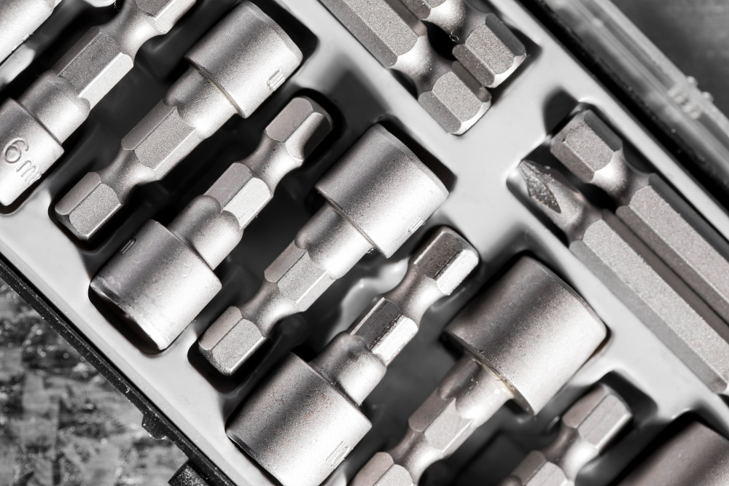
Torque wrenches and power tools get most of the attention, but none of them work without the right bit or socket attached. Apex bits & sockets fill that gap, and honestly, they don’t get enough credit.
What Sets Apex Apart
Apex has built a reputation on metallurgy and fit. A socket that slips or a bit that rounds off mid-task doesn’t just waste time, it can damage the fastener and the workpiece.
Reasons professionals stick with Apex:
- Precision-machined for a snug, secure fit
- Hardened materials that resist wear over repeated use
- Wide compatibility across impact drivers, torque wrenches, and pneumatic tools
- Reduced risk of rounded fasteners or slippage
Small components, big impact on overall assembly quality. That’s the honest summary.
Foam Profiling for Tools: Organization That Protects Performance
Here’s something often overlooked. All the precision tooling in the world won’t help if tools go missing, get damaged in transit, or sit tangled in a drawer somewhere.
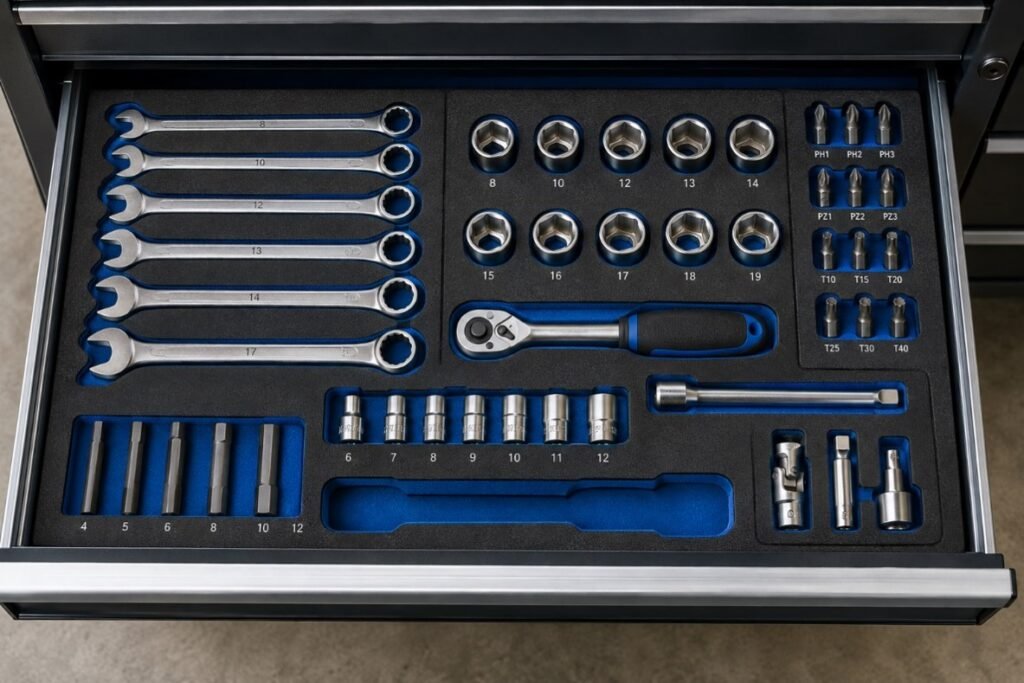
Foam profiling for tools solves this in a simple way. Custom-cut foam inserts hold each tool in its own designated space, visible at a glance.
Practical Advantages of Foam Profiling
- Instant visual check for missing tools, critical for FOD prevention in aviation settings
- Reduced damage during transport and storage
- Faster tool retrieval during time-sensitive tasks
- Cleaner, more professional workshop appearance
For sectors like aerospace, where a single missing tool can ground an aircraft inspection, this isn’t a nice-to-have. It’s part of the safety process.
 Choosing the Right Precision Tools for Your Operation
There’s no single best tool across every category. The right choice depends on your industry, your production volume, and how strict your quality standards are.
A few questions worth asking before buying:
- What torque range does the job actually require?
- Does the work need real-time data logging for compliance?
- How often will the tool be used, and by how many operators?
- What’s the environment like, heat, dust, moisture?
Getting these answers right upfront saves money and downtime later.
Conclusion
Assembly work rewards accuracy over guesswork. Cleco assembly tools bring speed and durability to high-volume lines. Desoutter assembly tools add digital precision where traceability matters most. Norbar torque wrenches set the benchmark for controlled, repeatable torque. Apex bits & sockets hold everything together, literally, with a fit that lasts. And foam profiling for tools keeps the whole system organized and safe.
At Sonta Tools, we supply and support these trusted brands across the UAE, helping industrial teams work with tools they can rely on, shift after shift.
Frequently Asked Questions
What industries commonly use Cleco assembly tools?
Cleco assembly tools are widely used in automotive manufacturing, general industry, and high-volume production environments where speed and ergonomic handling matter.
How do Desoutter assembly tools improve quality control?
Desoutter assembly tools use electronic torque monitoring and data logging, allowing manufacturers to track and verify every fastening operation for compliance and traceability.
Why are Norbar torque wrenches preferred for critical applications?
Norbar torque wrenches deliver accurate, repeatable torque output, which reduces the risk of joint failure in sectors like aviation, oil and gas, and power generation.
What is the purpose of foam profiling for tools?
Foam profiling for tools organises each tool into a dedicated space, making missing items easy to spot instantly, which supports safety and prevents foreign object damage.